


Product details and technical information
Technical Details
ARTICLE 57- (1) Except for residences, automatic suppression systems must be installed in the hoods of kitchens in shopping centres and high-rise buildings, food production facilities, and kitchens serving more than 100 people at a time. Gas detection, gas shut-off and warning systems must also be installed according to the properties of the gas used in cooking appliances.
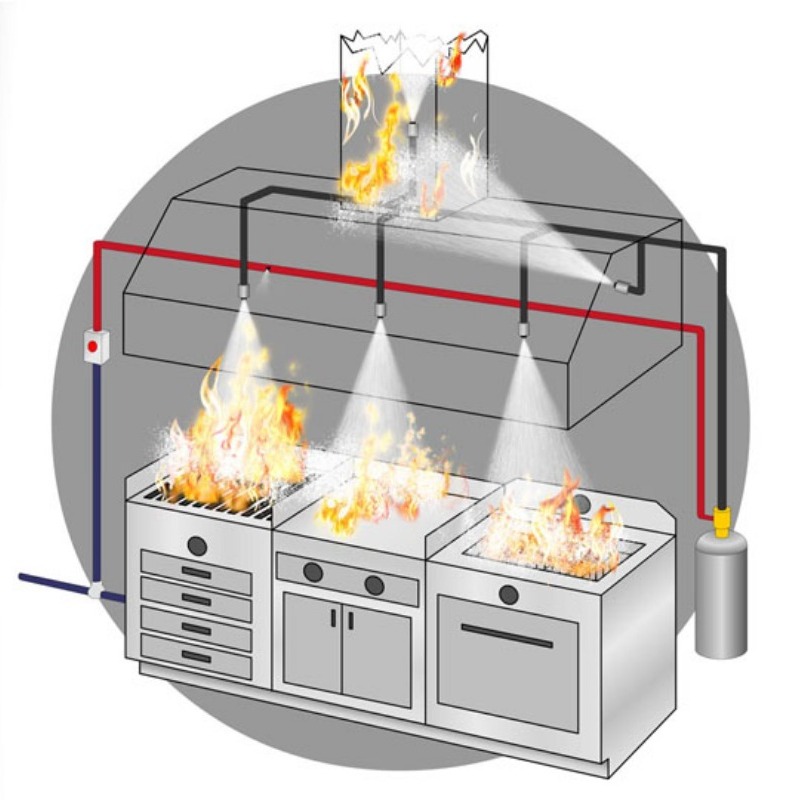
- MANUAL DISCHARGE HANDLE: Allows manual discharge of the system.
- GAS SHUT-OFF VALVE: Prevents further fuel from entering the area during a fire.
- ELECTRICAL CONTACT: Used to send a signal to the alarm system or shut down electrical appliances in the kitchen. APPROVED KITCHEN HOOD SUPPRESSION SYSTEMS: If TSE standards do not specify criteria for the design, installation and material properties of hood suppression systems, European Union standards or UL300 standards should be considered first.
- APPEARANCE: Components installed inside the kitchen hood are manufactured from chrome-plated, brass or stainless materials for an attractive finish. The hood system’s liquid extinguishing agent has a low pH, does not damage kitchen equipment and is easy to clean.
Kitchen hood suppression systems must be designed to UL300 and comply with NFPA 96 and NFPA 17A.
Each year, small kitchen fires around the world threaten entire buildings because necessary precautions have not been taken. A small kitchen fire can damage an entire shopping centre, hotel or similar building, causing millions of dollars in property losses as well as business and service disruption. Simple, economical precautions can be highly effective in preventing damage.
AUTOMATIC: When the detection line activates, the discharge mechanism rapidly releases the low-pH, potassium carbonate-based liquid extinguishing agent through the discharge line. This agent is specially developed for hot cooking oil fires.
FAST: Fusible metal detectors installed inside the hood detect fires very quickly.
EFFECTIVE EXTINGUISHING: The liquid extinguishing agent is discharged through nozzles to extinguish the fire quickly and effectively. On hot cooking oil fires, it forms a foam blanket that cuts off contact between the flames and oxygen.